Wednesday, February 27, 2013

Jane Austen Meets Agatha Christie at Buckfast Hall


First Paragraph:

"I winced as I descended the iron stairs letting down from the train carriage to the empty platform below. My exasperation wasn't for the slightly grubby glove the conductor offered to help me alight but for an especially loud peal of laughter from behind."


Death on Dartmoor by Dara England is the first instalment of the American Heiress Mystery series. Set in what I assume is the Victorian Era (cerca 19th Century), the characters' mannerisms and lives are very similar to how people from this era are portrayed in historical dramas and books by authors such as Jane Austen. They are very proper, wear corsets and women are best without personalities. Seen but not heard.


As with many of Jane Austen's heroines, our female protagonist has more wit and a sharper tongue than her mother thinks is wise. However is she to marry if she doesn't act docile.


That protagonist is Millicent Wright, a young, American women in her late 20's travelling with her mother around England. Heading out from their hometown of Chicago, they travel first to London and then onto the small village of Buckfastleigh on the invitation of Sir Oliver Longbourne. They first met in Chicago and he requested their company if ever they found themselves in England.


For Millicent, the trip is not one she's entirely comfortable with. Her mother has plans to find her an available bachelor (preferably one with a title) and has set her sites on the baronet. And so they find themselves on a train headed for Buckfastleigh, to be picked up by a carriage and taken to their final destination of Buckfast Hall. 


Whilst on the train, the two of them meet the charismatic Colonel Quinlan- who it turns out is headed for the same place. He has known the Longbourne family for years and is the brother-in-law of Sir Oliver. His sister married the baronet, but died in unfortunate circumstances two years prior, leaving her now 10-year-old son Phillip behind.


Soon after Millicent arrives, she begins hearing rumours about her prospective husband and even more chilling ones of the curse of the Longborne brides. Can they be true? And what exactly is the curse?


On the night of their arrival, the gothic novels that Millicent loves seem to become reality. A dinner of ten (six women and four men) ends in the tragic death of Sir Oliver. A Justice of the Peace and doctor are called for by one of the guests, Doctor Shephard, for a second opinion and verdict. When they surprise everyone with the news that Sir Oliver's death was no tragic accident, but rather a poisoning, theories start flying and accusations are abound. Is it the curse? A scorned woman? Or perhaps a man with grudge?


As they go to their separate rooms for the night, a passing comment by the Lady Longbourne (grandmother of Sir Oliver) alerts Millicent. Claiming that she knows who poisoned her grandson and why, Lady Longbourne refuses to reveal more when Millicent questions her. Lady Longbourne's time may be short, because as we all know, never reveal you know anything when a murderer is still on the lose. At least if you want to survive the night.


The Next day, Detective Abel Lockwood is called to the scene to investigate. The suspects must all be confined to the house and none of them are happy about it. Millicent is determined to be of assistance. This situation is too much like her novels for her to pass up. How can a book compare to solving a real murder? Detective Lockwood isn't too happy about having an amateur on the scene and so Millicent sets out to prove him wrong. She may also have to investigate the relationship the two seem to have. Could love be blooming between them?


Is snooping about in other's affairs wise or is she drawing attention to herself? If she's not careful, she may find herself locked in with the other skeletons in the closet.


When another body pops up and there can be no doubt that a murderer is on the loose in Buckfast Hall. But what is their motive? And will they kill again?


Done in the same style as the good, old-fashioned murder mysteries, there are suspects abound. Could it be the young Miss Amelia- who is rumoured to have had a romantic connection with the late Sir Oliver? Or perhaps her father, Doctor Shephard- trying to protect his daughter? Or the pleasant Colonel- who was trained to kill? Or maybe even Caroline (Oliver's sister)- trying to salvage her family and its fortune? Or one of the staff? Perhaps a young man accused of thieving earlier that day? The list keeps growing and both the detective and Millicent have their work cut out for them. It's a race to find the killer, before someone else ends up dead.


The plot is your traditional who-dunnit. The characters are typical of the genre. There's not much I have to say about either of these things. There's always a formula with this genre and always certain personality traits present in characters. Does that mean that the formula is tired and overused? No, well maybe a little, but there's a reason it's still going strong. It works. Having said that, the formula is pretty basic, so there's a large range of options available when creating a murder mystery story, which helps keep interest. But the secret to success? Why murder mysteries are so prevalent? Why there's always one on TV or in a book store? Simple, people can't resist a mystery. It is human nature to want to know the answer. We don't like to be kept guessing and we want everything wrapped up in a neat, little bow by the end. No loose threads for us. 


Some of the revelations were a little predictable and I did see the ending coming. There were a few surprises here and there, but on the whole nothing too shocking. However, the predictability did little to lessen my enjoyment of this book. This is one of those shamelessly enjoyable books. It may not be the most well written book, the characters may not be unique and the plot may have been done a million times, but I found myself wanting to know more about all of these things. When the story ended, I wanted to keep reading. A short book leads to a quick resolution and it was over before I knew it. It's safe to say I'll be checking out the next instalment when it's released.


Disclaimer: This book was sent to me by the author through a giveaway. This is not a sponsored review. All opinions are 100% my own.

Monday, February 25, 2013

Miracles Are in the Eye of the Beholder


First Paragraph:


"Lucas was dressed smartly, ready for work. He sat at the kitchen table and buttered his toast, and cracked at the top of the boiled egg his wife had made him for breakfast. Angela stood nearby, scrubbing at a small spot on the working surface. Layers of regret hung between them like unfashionable wallpaper. It made the place seem ugly."


 Amazon /Amazon.co.uk


The Miracle Inspector by Helen Smith takes place 30 years in the future. London is no longer a democracy, but run by dictators. This future is misogynistic and patriarchal. Women are not allowed to leave their homes (unless visiting female relatives), must wear a burqa when opening the door (or at any other point where they can be seen by people other than their husbands), are not allowed to work, have no rights or education and must ask their husbands for permission for anything they do. A woman is not allowed to use contraception or have a drink without her husband's permission.

There are no schools, children must always be kept inside, men are the only ones who venture past their front doors with any frequency. Once they reach a certain age, men are taken away and never seen again, while women are left to slowly fade away behind closed doors. All these changes were put into effect as men believed it would keep women and children safe from pedophiles, rapists and terrorists. Those three things pushed the city into ruin. There are no planes and the only transport is by car, ship or train. The only people who have cars work for the government- who also police all other means of travelling. Some try to leave, but the possibility of escape is infinitesimal and no one is ever heard of again. The best way to survive is to keep your head down and not ask questions. Create safety out of anonymity. 


Lucas works for the Ministry. After the change, divisions were set up for everything, some vital, some pointless. This way they hope to monitor everything. So there are Inspectors of Cats, of Women, of Flowers and then there's Lucas- who is the Inspector of Miracles. Miracles in this future are just as unlikely as in our world, perhaps even more so, but in the new legislation it was decided that "the right to believe in miracles was enshrined in the constitution. And if a miracle is to be believed in collectively, then first it has to be found." So now Lucas spends his days being called out to various "miracles", whether they be claims of the new Messiah or the Virgin Mary in a piece of toast.


Every night he comes home to his young wife, Angela, and they sit in silence. Occasionally, words will pass between them, but for the most part, their marriage is just as bleak as the world they live in. They love each other, but their communication skills are almost non-existent. Lucas claims, "their relationship was also about the silences." He believes they reach each other on a deeper level. This may be true, but there's a constant tension between them. Words go unspoken. As Lucas puts it, "he was too preoccupied with keeping his thoughts hidden, to worry about hers." He constantly fears he'll say the wrong thing, so ends up never saying anything at all. 


Lucas' thoughts are written in an odd, almost disjointed style, that perfectly emulates how thoughts occur in the mind. Some don't make sense, are completely irrelevant and utterly nonsensical. We basically get every thought that pops into his head, which is more realistic than the edited thoughts we normally read. It's a hard thing to make work, but it matches the humour and tone of the story very well.  There's this odd mix of a very dark world and plot, combined with light and sometimes very British humour. A lot of the lines have very dead-span delivery. For instance, there's a situation where three men are drinking Ribena. Apparently, Ribena has been found to increase a man's life span and his libido. Lucas decides the men must do it for the latter reason, as men don't survive long enough to have to worry about the former.


Meanwhile, Angela is a very lonely and bored woman (for understandable reasons). She spends all day at home and sees and speaks to almost no one, except Lucas- who barely speaks to her at all. Then one day an old poet by the name of Jesmond drops off his life story in her hands. He's famous for his rebellious poems and songs and was close to Lucas' father. But, Lucas doesn't want to see him, so Angela is the one he always visits. When he drops off letters and poems from his past, she can't resist reading them.


But Angela wants to get away. When she brings it up with Lucas, he suggests Cornwall (because he thinks he should say something, but doesn't really expect her to say yes). She agrees and begs him to get them out, take them to Cornwall to start a family and live a free life. The situation in London may be dire, but the rest of the world is as it is now. For the most part, it is a free world (depending on where you are) and a utopia to Londoners. This is the basic plot of the story. Getting to Cornwall. Why Cornwall, because all Londoners want to go on holiday to Cornwall.


Lucas, on the other hand, begins fantasising about other men's wives. Almost every other thought is about sex, almost to a distracting level. There's no point to it and it doesn't go anywhere. After a while, it gets a little irritating, but the story constantly switches between him, Angela and Jesmond. At least for a little while. So it's bearable. As we see more of his character, there is also this uneasy quality about it. He has such a desperate existence, that he feels very much like a man who could go over the edge at any moment. He cares for very little, but then that keeps you safe in this future. He is too young to know what freedom was like, he grew up with this oppressive regime, so I wouldn't be surprised if everyone was the same. Perhaps it's more noticeable with him because we're seeing his thoughts. 


Jesmond gets small sections in the book, but for the most part he's unrelated to the plot. He is rallying up a rebellion with his underground poetry- where the androgynous look is all the rage. It's more than a fashion statement, it's a way for women to stay safe and men to show solidarity with them. Baggy clothes hide figures, women keep themselves thin to create a flatter silhouette. They keep their hair short, while men grow it long and keep themselves clean-shaven. This way women can pass as men in the right circles. 


Half-way through the book, the situation changes. The story is told more and more through increasingly fractured thoughts. There'a good reason for it, but saying more would spoil it. The effect it gives is great. It creates the atmosphere, builds the tension and causes a growing sense of fear to develop.


The pace quickens exponentially. What starts out as quite a slow book, suddenly becomes a race to the finish line. It's hard not to give anything away, but if you read it you'll understand. So much happens in the second-half. Everything starts falling together and then falling apart. 


I would almost say that the second-half of the book is an entirely different story than the first. They are connected through the main characters, but everything else changes. The book really comes into its own in the second-half. The first-half is almost irrelevant. The characters become more real and more important to the reader. In the first-half I was almost apathetic towards the characters, but when they reach the second-half, suddenly I was on the edge of my seat willing them on. Somewhere between the first and second-half, a switch is flipped and everything changes. The second-half will be what I remember of this book, it will be the reason I tell people to read it, it will be what makes me read it again. I will go through the slow, irrelevant first-half time and time again to reach the wonderful second-half.


Like I said before, the pace changes unbelievably quickly and the ending hits you before you know it. I loved the ending. It's very ambiguous, but brilliant. There are so many questions that appear throughout the story and you don't really get answers to any of them. That may annoy some readers, but I found it all the more gripping and all the more realistic. Life doesn't have all the answers. There are some things we will never know. The ending can be interpreted in a multitude of ways. There's no clarity and we don't really know what happened. I didn't know whether to feel happy or sad, empty or complete. Those unanswered questions, will keep the story and its characters with you, long after the final word.


Disclaimer: This book was sent to me by the author through a giveaway. This is not a sponsored review. All opinions are 100% my own.


Saturday, February 23, 2013

What's a Holiday Without a Little Mayhem?


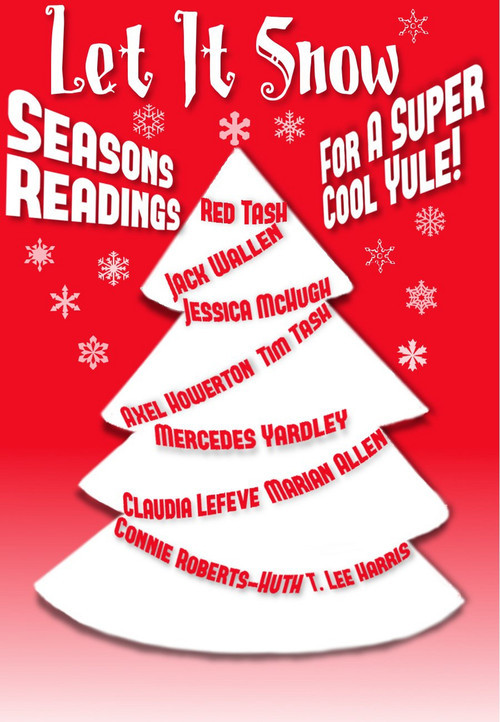
Let it Snow! Season's Readings for a Super-Cool Yule! is a collection of 10 short stories. The only thing all the tales have in common is the time of year they're each set around, i.e. Christmas.


There's also the interesting addition that each story contains one or more characters from the relevant author's other books. So if you like a certain character, you can find more stories about them. If you do, all the links are helpfully provided in Let in Snow!, at the end of each author's contribution.


The first story is "A Laurents County Landfill Christmas" by Red Tash. 


First Sentence:

"Winter in Laurents County, Indiana is cold, damp, and gray.

Set around a rather eccentric troll, who decides to throw a Christmas bash for all his friends. Set in a world of pixies, wizards, changelings and trolls (among other things), who co-exist with humans much the same way muggles and magic do in the Harry Potter series. Either you know it exists or you don't.

This story was a little confusing. There were so many references to characters and events from previous books that it was difficult to tell who people were or what their relationships to each other were. Half the time I didn't know what was going on. However, I enjoyed the world it's set in and the characters too. Once you get past the whole "who's who?" and reach the story, it becomes an enjoyable little tale about spending Christmas with the people you love, with a little magic thrown in.


Next is "Silent Night" by Jack Wallen. 


First Sentence:

"Silent night. Holy night. All is calm, all is quiet."

This is a story with a darker tone. John Burgess is the leader of the Zero Day Collective. Run by the some of the most wealthy and influential people around the globe, their main goal is to make money. How are they going to go about this? Well, they've created a machine that is going to "cleanse" the human race- all under the guise of producing a source of renewable energy. They're not aiming for anyone in particular- just the entire globe. Saying anymore would be a spoiler, so I'll just end on this note- John Burgess is a ruthless, charismatic (aren't they always) man. Money is his only objective and he cares little how he acquires it. A delightfully dark story, that'll leave you uneasy long after it's over.

Third is "Crazed in Christmas City" by Jessica McHugh. 


First Sentence:

"The only gift Avery Norton received during her first Christmas in Taunton State Lunatic Asylum was a heavy dose of sedatives."

Another darker tale- this one is set in Taunton State Lunatic Asylum. Avery Norton spent her last Christmas so heavily sedated she may as well have been unconscious. This year she plans to actually attend the celebrations. Why is she in an asylum? Well Avery is accused of murdering quite a few people, though she doesn't believe it herself. It's left fairly ambiguous whether or not she actually is innocent or guilty. Her mother enjoys taunting her about it (with Christmas cards), in a rather passive-aggressive way and there is the question of if her mother is really the killer, but nothing is revealed. 

This was one of the stories that stood out the most to me. I'm a sucker for a mystery and Avery is an interesting protagonist. As the main character, we want to trust her and get behind her, but we're constantly unsure whether she's as innocent as she claims. There's certainly a quality about her that makes you a little nervous. She has a few psychotic tendencies, but whether she developed those as a result of being incarcerated is unclear. I'll definitely be checking out the full story in the related book.


Next is another off-beat story. "A Manlove and Kickerdick Xmess" by Axel Howerton, pretty much tells you what the tone is going to be with the title alone.


First Sentence:

"So what the hell do you want, you big fucking baby?"

Arthur Menlowe and Jurgen Kierkedoek are stage performers who act out explicit scenes under their pseudonyms. I get the feeling that this short story is kept pretty tame for the book, because in this story our two lovers are chauffeuring a rather obnoxious politician to dinner (rather than focusing on their other job). Though the senator does want to conclude dinner by taking his son somewhere special to "make him a man." 

The whole time our main characters are trying to keep themselves in check, while the rather homophobic senator makes crass comments about his son being gay (because he's a virgin). There is a rather satisfying ending, that puts the senator in his place and takes the tension out of the  unpleasant Christmas Eve everyone had been experiencing. A rather short story, that leaves a lot untold, but tells you enough to know whether these characters are for you. On the one hand you have the very punk Jurgen and on the other, the very camp Arthur. A curiously well-fighting couple.


Next up is "The Snow Wolf's Gift" by Tim Tash. 


First Sentence:

"Sayenne stepped out of the blue glow, taking a deep breath as the portal closed behind her."

Another fantasy tale, this one about a shape-shifter named Sayenne. She crosses the portal between her world and ours, coming across a wizard named Gandira, who has unfortunately broken his leg. Whilst helping him, they are attacked by a dragon and Sayenne is forced to run. 

The plot of this one is a little vague and I think would make more sense in context. Again, we don't know the characters, we don't know Sayenne's reasoning, we don't know why she's being chased, but on the whole, there is enough of her story described to figure out whether or not you want to know more. I can't really say more about the characters or plot, as the story didn't reveal a lot about them.


Sixth in the book was "A Serial Killer Christmas" by Mercedes Yardley. 


First Sentence:

"Something about the holidays made our dear Peter sad."

This one features a very insane, but also very likeable, serial killer named Peter. The whole plot is him preparing his apartment for his "guest" that evening. His MO is killing young women, but he wants them to die beautifully, so he has to decorate his apartment and get his intended victim (his "beloved") gifts before she arrives.

Peter has quite a young mind. His mother was murdered when he was a child, which may explain it a little, as well as his "hobby". The things he wants to do or tell his "beloved" are very childish. Showing her a photo he took, or some of the mannerisms he uses are similar to a child communicating with their mother, wanting attention and praise. He has a quality that makes his very endearing, though psychotic. He sincerely wants to make his "guests" happy. He wants them to be beautiful and he believed it with all his heart, but he is a killer. 


This was another story that I really enjoyed and I plan on discovering more about in the full book. Like I said before, I'm a sucker for a mystery. Even if the protagonist is the one creating them.


Now we come to " Old Mexia Christmas Brew" by Claudia Lefeve.


First Sentence:

"After dinner, everyone left the Everett residence and headed back to their respective homes- with the exception of Jenny and Chase, who loitered just a little too long saying goodbye to their friends."

Again we have a story with confusing elements to it. It's set in the future, but also in another reality, but there's more than one reality, one of which is a few years ahead of our time and one of which is hundreds of years in the future and there's a war going on in it, but some characters can travel between realities and time with a portal and they're part of a rebellion. Honestly, there were so many details that I had no idea what to do with them. I'm pretty sure I got some of the above points wrong, but can you blame me? 

On a simpler note, the plot revolves around Jenny and Chase- who come from different realities, but are now in the same reality fighting in the rebellion, but it's a different reality from either of their own realities and our own reality and - I'm just going to stop trying to understand the plot from another book, that we are only given vague references to. The plot is that Chase likes Jenny. He wants to impress her, so when she asks to time-travel and "reality hop?" to Mexico, December 20, 2012, he agrees. There's also something about him being able to see the future, but basically Jenny wants to travel to her country on the night that everyone believed would end in the apocalypse. Why? To bring a little Christmas cheer to people fearing for their lives. 


A nice, simple story (once you get past all the confusing parts) about their first date and bringing joy to those around you.


Our next story is "The Pratty Who Saved Christmas" by Marian Allen. 


First Sentence:

"Dickens O'Henry was mad to begin with."

Dickens O'Henry is a creditor (who also runs a pub) from the planet Llannonn. This is not his real name by the way, it is his assumed Earth name, though I don't believe this story is set on Earth. 

He and his assistant, Humbug Plugugly (can you see the Christmas theme?) are trying to track down Nittleigh Witterr, who is late on his payment. They plan to catch him as he heads home for the Anti-Hot Solemnities (Christmas to you and me) to be with his family. Unfortunately, they miss him and are forced to follow his cousin, Head Librarian Holly Jahangiri, to try find him. Holly discovers their plan and decides having her cousin attacked and possibly killed during the holidays would be a bit of a downer, so she tries to distract the two crooks. Helping her is the Living Book A Compendium of Christmas Classics, who explains what Christmas is and what it means. 


What is a Pratty and what does it have to do with the story? Well, you'll just have to read it to find out. Ending on a line that will have you joyfully cringing in the same manner we do reading a Christmas cracker joke. Possibly the most Christmassy feeling story of them all.


Ninth on the list is "Believe" by Connie Roberts-Huth.


First Sentence:

"Somewhere behind me, I could hear the faintest notes of Joy to the World breaking through the otherwise painful silence around me."

Zoe Delante experienced an unexplained (at least in this book) tragedy during her last case. To escape the pain, she travelled from Baltimore to a small town in Arizona to help herself heal. But, she soon found money running low and decided to start working again.

Her profession is a psychic, who works with the police during murder investigations. She can both see and speak to the dead, which often helps her find the truth. Her case at the moment is helping find a young girl's killer, which involves talking to the young girl, Eloise. Finding out the truth can be just as unsavoury as you'd imagine and especially when children are involved. Who is the mysterious killer that Eloise refers to as the "fake Santa" and what were his motives? 


This was another story that stood out for me. The ending is a little rushed, but what I most enjoyed about the story was Eloise. I'm not sure why I liked her character so much, maybe it's because she is so childlike. There are times when she tries to act very adult (as children sometimes do) and she sees and understands a lot more than most people would give her credit for. But, she also breaks sometimes. She's a little girl who's just been murdered and is scared and alone. She wants her mother, but is determined to help Zoe, as she believes the "fake Santa" will try to kill her mother next. A very endearing character, whose story you want to know the conclusion of.


Finally, we come to " Hau'oli Hannukkah" by T. Lee Harris. 


First Sentence:

"Hard to believe it was December."

Set (as you might have guessed) in Hawaii, we meet Josh Katzen, an ex-covert operative who now works as a photographer of archeological finds. He finds himself stuck in Hawaii and unable to go home for the holidays, as all flights to his hometown have been cancelled due to snow. Feeling a little homesick, he accepts an offer from his friend Dora, to crash at her place for the holidays. She also has a plan to take his mind of things with a surprise she knows he'll love. But Josh is about to find out that the holidays in Hawaii aren't always as relaxing as they may sound and maybe his covert-op skills will be needed once more.

A nice story about being home for the holidays, with a little espionage thrown in.


All in all, Let it Snow! is a delightful collection of short stories, with a diverse and eclectic range of topics explored. Whether you want a mystery, a dark tale, fantasy, sic-fi, slice of life or just a little Christmas spirit, you'll find it in this book. Something for everyone, that can be enjoyed at anytime of year, especially around the holidays.


Disclaimer: This book was sent to me by one of the authors through the giveaway. This is not a sponsored review. All opinions are 100% my own.

Thursday, February 21, 2013

As The Ice Creeps In, The Monsters Will Follow and Enemies Will Be Revealed


First Paragraph:

"It was cold, the kind of cold that made bones feel brittle and hands ache. My breath streamed from my lips like smoke, and my feet made wet, crunching sounds in the snow as I slipped through the forest. As I ran, my lungs ached and my sack of yarn thumped against my back. My cloak tangled around my ankles, but I yanked it free without stopping."


Frost by Kate Avery Ellison is the first book in the Frost Chronicles series. 


Set in a cold world, elusive monsters called "Watchers" exist. Hiding in the forest, they are rarely ever seen, hunt at night, are immune to weapons and are only held at bay by snow blossoms (sky blue flowers) that people keep around their thresholds and wear as necklaces for protection. However, they don't guarantee your safety.


The villagers of Iceliss (just known as "the village" to locals) have hard lives in the Frost. To survive in the frozen, forested landscape every man, woman and child needs to do their part. There are quotas to make sure of it. If you don't meet your quota, you don't get your rations for the week. There are a multitude of different tasks, such as hunting, farming, weaving, dyeing, gardening, etc. From your profession, your surname is derived.


Lia Weaver's job is to spin wool into yarn. She also manages a farm no other villager wanted, as it lies on the outskirts of village, with nothing but forest and Watchers beyond. She must also look after her twin brother, John (who is unable to walk) and free-spitired younger sister, Ivy, after their parents were killed by Watchers.


No one is entirely sure what happened to her parents. They were found without their snow blossom necklaces and were last seen entering the forest with members of the Brewer family. The Brewer family made it back, but Lia's parents didn't.


Now more than ever, her remaining family must follow the rules to survive. If the village believes her unfit, they will take her siblings away. Suddenly, Lia reaches a critical point when the terrifying Farthers come to her village. They come from the city of Aeralis, in the far South. They are known as a brutal race, who imprison and abuse any and all. They are also technologically advanced, especially compared to the little village in the Frost, where technology will get you killed (as it attracts the attention of the Watchers). Aeralis has airships, gas lamps and seems to be similar to cities that exist in the Steampunk world. A dark, frightening place- whose rumours are warning enough.


When a wounded boy turns up in the forest by their house, Ivy is adamant that they save him. He is obviously a Farther and helping him is strictly against the rules, but Lia gives in to Ivy's request. It soon becomes clear that the Farthers are searching for this strange boy, but why? Was it a mistake to help him?


As Lia tries to find answers, her world is turned upside down. Who are The Thorns? What is the Gate? Who can she trust? And how did her parents really die? In this harsh world, one mistake will lead to your death, whether by exposure, Watcher or human. 


The plot is fast-moving and sets a great pace. The descriptive writing is done well and depicts the severe world the characters live in realistically. Reading the story, I could feel the icy wind against my face and the constant threat of danger surrounding them. At no point do you ever feel that the characters are safe. This is simply because a safe world does not exist for them. Even without the threat of monsters all around, or brutal soldiers attacking, the elements alone are enough to kill you if you aren't careful. 


The characters themselves are realistically nothing special. What I mean is that not every person in the real world is the Chosen One or has ninja fighting skills. Some people you meet might not even be interesting. Some will stick out more than others and some you won't even notice. And that's exactly what the characters are like in this book. Normal, everyday people. Some you relate to and some you forget as soon as they're gone. 


The ending leaves you with just enough curiosity to keep reading. For those who don't want to continue the series (for whatever reason), it's also just complete enough to be a stand-alone story. Personally, I enjoyed this book. It held my attention and kept me guessing. Normally, I can figure out what the plot-twists will be or what secrets will be revealed, but this book had a few that surprised me.  The finale happened so quickly that I was left wanting to immediately start the next book. I've always been the type of person who has to finish a story once I've started it and I'll definitely be checking out the rest of the series. If you're a fan of young adult books, fantasy or just interested, why not try it too?


Disclaimer: I was sent this book by the author through a giveaway. This is not a sponsored review. All opinions are 100% my own.

Monday, February 18, 2013

Gingerbread Houses Always Contain Secrets


 First Paragraph: 


"Holy crap!" Those were the first words out of my cousin's mouth when she saw me come through the door with my overnight bag the day after I fell two stories off a roof. "You look like hell!"


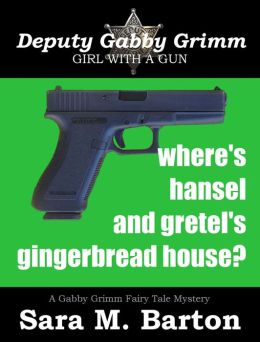
Where's Hansel and Gretel's Gingerbread House? is the second book in the Gabby Grimm Fairy Tale Mysteries series.


Set around Gabby Grimm, the  Deputy Sheriff of Latima Falls, who receives a call from her cousin, Nettie, asking her to come visit A.S.A.P.. So it's a long train ride on aching limbs (after a incident on a roof) from Vermont to NYC for Gabby. Once there Nettie spills her heart out about being used by (yet another) man, Joe Fortune, who has now mysteriously vanished. All he left behind was a phone number and when Gabby calls him (to give him a piece of her mind) she reaches not Joe Fortuna, but Mike Alves. Next thing she knows, she has her very angry boss calling her up, courtesy of the FBI, demanding she get both herself and cousin down to Vermont now. Nettie is a wanted woman and the FBI are coming for her.


What has her cousin stumbled into now? Who is Joe Fortuna and Mike Alves? Are they the same person? Why are the FBI involved? And does it have anything to do with Nettie's job in real estate?


It's a quick dash to gather evidence, hide it from prying eyes and prove both their innocence and uncover the conspiracy that unfolds.


The story starts pretty slow, but starts to pick up later on. Considering the length of this novella, a slow start is easily read through. It's not slow or long enough to make you lose attention. The plot itself is pretty fun and enjoyable. The book is set around Christmas (though it can be read at any point during the year), but isn't about the holiday itself, it's more of just a simple backdrop. Nice snow, cold weather and a very important gingerbread house. 


The characters are likeable and very similar to the types of characters this author creates. If you've read any of her other books, you can feel the similarities between them. For one, a lot of her stories are set in Vermont. There's usually a confident, female lead who needs to help someone in trouble, usually someone who can't help themselves.


There are also nice, little details (from the original fairytales this series is based loosely on) woven into the text. The plot of each book is set around a basic detail from the Brothers Grimm stories. In this book it's the gingerbread house from Hansel and Gretel. There are also other very small things added in. Gabby has a cat called Puss N' Boots. Her father runs a German style chalet called Black Forest. There are a few nice "easter eggs" worked in, that are fun to come across.


I haven't read the first book (Snow White and the Huntsmen), but I don't think it affected my enjoyment of this book at all. I believe each book can be a stand alone story or read as a series, with each book having a different setting, but with a few recurring characters.


A fun, light read. If you're a fan of Sara Barton you'll love these. If you're interested in cozy mysteries, why not try it? A quick read that will lead to an enjoyable afternoon.


Disclaimer: This book was sent to me by the author through a giveaway. This is not a sponsored review. All opinions are 100% my own.